Tag

vegan

Browsing

Are you curious about how a whole-food vegan diet could change your life? This isn’t just about avoiding meat and dairy; it’s about embracing a world of plant-based goodness.

Let’s take a closer look at the amazing benefits this diet can bring to your health and well-being.

Happy Heart

A whole-food vegan diet is a powerhouse for heart health. Foods like leafy greens, whole grains, and legumes are packed with nutrients that help keep your heart strong.

By cutting out meat and dairy, which can be high in cholesterol, you reduce the risk of heart disease and improve your blood pressure and cholesterol levels.

Keeping a Healthy Weight

Struggling with weight management? Plants to the rescue! High in fiber and low in calories, plant-based foods help you feel full and satisfied without overeating. This natural approach to eating often leads to sustainable weight loss and a healthier body.

Balanced Blood Sugar

Whole grains, fruits, and vegetables offer a slow, steady release of energy, which is excellent for blood sugar control. This diet can be particularly beneficial for preventing or managing type 2 diabetes, as it avoids the high-glycemic processed foods that cause blood sugar spikes.

Lots of Nutrients for a Strong Body

Each plant-based food brings its own set of nutrients to the table. Dark leafy greens are rich in iron and calcium, berries are bursting with antioxidants, and nuts are a great source of healthy fats and protein.

This diet ensures you get a diverse range of nutrients essential for a strong immune system and overall health.

Happy Tummy

A happy gut leads to a happy you! The fiber in plant foods keeps your digestive system running smoothly, reducing the risk of constipation and other digestive issues.

A diet rich in fruits, vegetables, and whole grains supports a healthy gut microbiome, which is vital for your overall health.

Good for Animals and the Planet

Beyond personal health benefits, a whole-food vegan diet is a kind choice for animals and the environment. It reduces your carbon footprint and contributes to a more sustainable future, adding an ethical dimension to your food choices.

Mental Clarity and Energy

Many who adopt a whole-food vegan diet report feeling more energetic and mentally clear. The combination of nutrient-dense foods and the absence of processed, heavy foods can lead to improved focus and vitality.

Disease Prevention

Research suggests that a plant-based diet can lower the risk of developing certain cancers thanks to the high intake of fruits, vegetables, and legumes, all rich in cancer-fighting antioxidants and phytochemicals.

Finishing Thoughts

Embarking on a whole-food vegan diet is more than a dietary change; it’s a journey towards a healthier, more ethical way of living. It’s about discovering the joy of cooking with whole, plant-based ingredients and exploring new flavors and textures.

Remember, balance is key, and it’s important to ensure you’re getting a variety of nutrients. Whether you’re looking to improve your health, protect the environment, or take a stand for animal welfare, a whole-food vegan diet is a rewarding and impactful choice. So, why not start this journey today and see where it takes you?

In recent years, the popularity of veganism has surged as people across the globe recognize the ethical, environmental, and health-related implications of their dietary choices. By adopting a vegan lifestyle, individuals make a conscious decision to exclude all animal products from their diet and, in many cases, their daily lives. In this article, we explore the compelling reasons to embrace veganism, highlighting the benefits for animals, the planet, and personal well-being.


Ethical Considerations:

One of the primary motivations for going vegan is a concern for animal welfare. By choosing a vegan lifestyle, individuals actively reject the exploitation and suffering of animals for food, clothing, and other purposes. Veganism promotes compassion and respect for all living beings, recognizing their inherent rights and advocating for a more humane society.

Environmental Impact:

Adopting a vegan lifestyle can have a significant positive impact on the environment. Animal agriculture is a leading contributor to greenhouse gas emissions, deforestation, water pollution, and species extinction. By eliminating animal products from your diet, you reduce your carbon footprint, preserve natural resources, and help mitigate climate change.


Health Benefits:

A well-planned vegan diet can offer numerous health benefits. Plant-based diets tend to be rich in fiber, vitamins, minerals, and antioxidants while being lower in saturated fats and cholesterol. Research suggests that vegan diets may lower the risk of heart disease, high blood pressure, type 2 diabetes, and certain types of cancer. They can also contribute to maintaining a healthy weight and overall well-being.

Increased Awareness and Mindfulness:

Choosing a vegan lifestyle encourages individuals to become more conscious of their food choices and the impact they have on their bodies and the world around them. It fosters a greater sense of mindfulness, as vegans often prioritize whole, plant-based foods and opt for sustainable and cruelty-free products in other aspects of their lives, such as clothing, cosmetics, and household items.


Support for Global Food Security:

Feeding a growing global population is a pressing concern. Plant-based diets have the potential to address this issue more sustainably. By shifting towards veganism, we can utilize resources more efficiently, reduce land use for animal agriculture, and redirect food production towards plant-based sources. This can help ensure food security for all while reducing the strain on the planet.

Culinary Exploration:

Going vegan opens up a world of culinary exploration and creativity. Embracing plant-based foods encourages individuals to discover new ingredients, flavors, and cooking techniques. Vegan cuisine offers a diverse range of delicious and nutritious options, including vibrant salads, hearty grain bowls, flavorful stir-fries, and indulgent desserts, showcasing the incredible versatility of plant-based ingredients.

Conclusion:

Embracing a vegan lifestyle is a powerful and conscientious choice. It aligns with values of compassion, sustainability, and personal well-being. By going vegan, individuals contribute to the welfare of animals, alleviate environmental pressures, promote better health, and inspire positive change. With a wealth of reasons to support this compassionate choice, veganism is an opportunity to make a profound and meaningful impact on both individual lives and the world we share.

reasons to go vegan
reasons to go vegan

About Vegan Charcuterie Board

When it comes to hosting parties or gatherings, charcuterie boards have become increasingly popular in recent years. Traditionally, charcuterie boards consist of various types of meats, cheeses, fruits, and nuts, but vegan charcuterie boards are also becoming more and more popular. A vegan charcuterie board is a great option for those who want to provide a delicious and visually appealing spread while accommodating different dietary restrictions.

One of the keys to creating a successful vegan charcuterie board is to include a variety of textures and flavors. For example, you might include marinated tofu, vegan cheeses, roasted vegetables, olives, and hummus. You can also add different types of crackers or bread to add some crunch.

Another important consideration when creating a plant-based charcuterie board is to use high-quality ingredients. Opt for fresh, organic produce whenever possible and look for vegan cheeses that are made from wholesome ingredients like nuts and seeds.

To make this plant-based charcuterie board even more visually appealing, you can arrange your ingredients in a thoughtful and eye-catching way. Use different shapes and colors to create a visually striking display that will impress your guests.

When it comes to the perfect dipping sauce for your charcuterie board, there are many options. You might opt for a homemade pesto or hummus, or you might choose a store-bought vegan dip. Just be sure to read the ingredients carefully to ensure that they are truly vegan.

Conclusion

In conclusion, a vegan charcuterie board is a great option for anyone who wants to provide a delicious and visually appealing spread while accommodating different dietary restrictions. By using high-quality ingredients and arranging your ingredients in an eye-catching way, you can create a vegan charcuterie board that will impress even the most discerning guests. With a little bit of creativity and attention to detail, your vegan charcuterie board is sure to be a hit at your next party or gathering. Check out the recipe below! You may also want to check other recipes on the site.

Vegan “Charcuterie” Board Recipe

Prep Time 30 minutes
Total Time 30 minutes
Servings 8 people
Calories 433
Looking for a vegan appetizer that’s packed with flavor and perfect for sharing? Look no further than this delicious vegan charcuterie board! Featuring an array of salty, sweet, savory, and spicy plant-based treats, this charcuterie board is sure to be a hit at your next party or gathering.

Ingredients

SALTY (choose 2-3)

  • Olives
  • Olive Tapenade (or store-bought)
  • Salted roasted nuts (cashews, pistachios, almonds, pecans)
  • Quick Pickled Veggies (or store-bought pickles or cornichons)

SWEET (choose 2-3)

  • Candied Nuts
  • Orange Thyme Jam (or store-bought)
  • Dates
  • Fresh fruit of choice (strawberries, blackberries, green apple, peaches)
  • Truffles or Chocolate (or store-bought dark chocolate)

SAVORY (choose 1-2)

  • Easy Garlic & Herb Vegan Cheese (we like Treeline for store-bought)
  • Spicy Vegan Pimento Cheese Ball
  • Hummus (or store-bought)
  • Crispy Baked Chickpeas (or store-bought)

SPICY (choose 1-2)

  • Vegan Pepperoni
  • Spicy Pickled Cauliflower
  • Charred Serrano White Bean Dip

FOR DIPPING (choose 2-3)

  • 1- Bowl Vegan Gluten-Free Crackers (or store-bought)
  • Bread of choice
  • Fresh veggies of choice (carrots, radishes, green beans/peas, cucumber)

Instructions 

  • Start by making your selections from each section (salty, sweet, savory, spicy, and for dipping). We chose the following for our board pictured above: Salty: olives and cornichons; Sweet: candied nuts, dates, and fresh fruit; Savory: spicy vegan pimento cheese ball and Treeline’s herb garlic soft cheese; Spicy: vegan pepperoni and charred serrano white bean dip; and For Dipping: Simple Mills almond flour crackers, Whole Foods gluten-free oat and seed crispbreads, rustic French bread, and fresh veggies!
  • To make the homemade components of the charcuterie board pictured above, we started by making our spicy vegan pimento cheese ball in advance and letting it chill for the minimum time suggested in the recipe (6 hours). Next we made vegan pepperoni and set it aside when it was done. Then we made charred serrano white bean dip and placed it in the refrigerator to chill. Lastly we made candied nuts and cut up the fresh fruits and veggies!
  • Once you’ve gathered and prepared your components, it’s time to assemble! Grab a wooden tray or cutting board (or a parchment-lined baking sheet). You want it to be big enough to fit everything but small enough that your snacks look abundant, not sparse.
  • Place your snacks on the board in order from largest to smallest. Start with any bowls or dishes for snacks (like olives and hummus) and space them out on the board so you can place smaller snacks in between. Then fill in the extra space with “loose” snacks, like veggies and crackers. Our favorite trick is to place stackable snacks (like cucumbers and vegan pepperoni) in curves or around the dishes. All that’s left is to get your snack on!
  • Best when fresh. Store leftover components in the refrigerator covered on the board or separately for up to 1-2 days.

Notes

1- Prep time is for assembling the board only. It assumes all components are either store-bought or prepared in advance.
2- Nutrition information is a rough estimate calculated for 8 people with the approximate ingredients and quantities included on the board pictured.

Nutrition (1 of  servings)

Serving: 1 serving Calories: 433 Carbohydrates: 40.7 g Protein: 14.4 g Fat: 30 g Saturated Fat: 4.7 g Polyunsaturated Fat: 3.4 g Monounsaturated Fat: 7.7 g Trans Fat: 0 g Cholesterol: 0 mg Sodium: 692 mg Potassium: 403 mg Fiber: 6.7 g Sugar: 15.7 g Vitamin C: 8.4 mg Calcium: 143 mg Iron: 4.3 mg
 
Calories: 433kcal
Course: Appetizer
Cuisine: gluten-free, vegan
Keyword: Charcuterie, vegan Charcuterie, vegan recipes


Vegan Coconut Chickpea Curry is a delicious and nutritious plant-based meal that is packed with flavor and spice. This curry is a perfect combination of creamy coconut milk and protein-rich chickpeas, making it a filling and satisfying meal. The dish is also loaded with vegetables such as bell peppers, onions, and spinach, which makes it a wholesome and balanced meal.

To make this recipe, start by sautéing onions and bell peppers in coconut oil until they are tender. Then, add garlic, ginger, and curry powder to the pan and cook until fragrant. Next, add chickpeas and coconut milk to the pan, and let it simmer for a few minutes until the chickpeas are heated through. Finally, add spinach and let it cook for a minute until wilted.

This dish is incredibly versatile and can be served with rice, quinoa, or any other grain of your choice. It is also perfect as a side dish or a main course, depending on your appetite. The creamy coconut milk and the spices in the curry make it a warming and comforting meal, perfect for cold winter nights.

One of the best things about this recipe is that it is incredibly healthy. Chickpeas are a great source of plant-based protein and are also rich in fiber, which helps to keep you feeling full for longer. The vegetables in the curry are also loaded with vitamins and minerals, making this a nourishing meal for your body.

In addition to being healthy and delicious, Vegan Coconut Chickpea Curry is also very easy to make. With just a few simple ingredients and a little bit of time, you can have a flavorful and wholesome meal on your table in no time.

In conclusion, Vegan Coconut Chickpea Curry is a perfect dish for anyone who is looking for a healthy and tasty meal. It is versatile, easy to make, and packed with flavor and nutrients. So, next time you are looking for a new vegan recipe to try, give this one a go!


Vegan Coconut Chickpea Curry

Prep Time 15 minutes
Cook Time 30 minutes
Total Time 45 minutes
Servings 4
Calories 225
Vegan Coconut Chickpea Curry is a delicious and nutritious plant-based meal that is packed with flavor and spice. This curry is a perfect combination of creamy coconut milk and protein-rich chickpeas, making it a filling and satisfying meal. The dish is also loaded with vegetables such as bell peppers, onions, and spinach, which makes it a wholesome and balanced meal.

Ingredients

  • 2 tablespoons coconut oil
  • 1 medium red onion or yellow onion (diced)
  • 14 ounces fresh or canned tomatoes (diced (400g))
  • sea salt & ground black pepper (to taste)
  • 16 ounces canned chickpeas (drained & rinsed (454g))
  • 3 garlic cloves (minced)
  • 1 ½ tablespoons garam masala – I use this one
  • 1 teaspoon curry powder I use this one
  • ¼ teaspoon cumin
  • 13.5 ounces canned coconut milk* ((383g))
  • 2 teaspoons coconut flour (OPTIONAL**)
  • 1 small lime (juice of)

Instructions 

  • In a deep pot over medium-high heat, add the coconut oil.
  • Add in the onions and tomatoes. Grind some sea salt and ground black pepper over the mixture and stir together. Lower heat to medium and allow to cook down until juices of the tomatoes are naturally released and onions are soft, about 10 minutes.
  • Add in the chickpeas, garlic, garam masala, curry powder and cumin. Stir to combine.
  • Add in the coconut milk and stir again. Add in the coconut flour which helps to slightly thicken the curry. Bring the curry to a boil, and then reduce to medium-low so that the mixture continues to simmer for 10 to 12 more minutes.
  • Taste the curry and season with salt and pepper if you desire. Remove the curry from the heat and squeeze a lime lightly over the top of the curry, stirring to combine. Don’t skip this step!! Allow to cool slightly and then serve. Enjoy!

Notes

This recipe is vegan and gluten-free.
I’ve been asked this MANY times – this is the curry powder I use! It’s my favourite!
*Many readers have asked and yes you can definitely use reduced-fat coconut milk! You can even use boxed coconut milk if those calories suit you better.
** The coconut flour is optional and up to you! You can also use any other gluten-free flour you have on hand to thicken it, I just loved this flavour the most. You also don’t need to thicken it if you don’t want to, we skip it all the time.
WW POINTS: 6 with reduced fat coconut milk, 12 with regular (natural occurring sugar from tomatoes)
HOW TO STORE:You can store this curry in an air-tight tupperware container in the fridge for up a week. It’s an excellent candidate for freezing and can be stored in the freezer for up to a month.
A FEW NOTES:
1. This curry lasts for at least 5 days in the fridge as leftovers.
2. You can serve with whole wheat naan bread, basmati rice, or even crispy tortilla chips.
3. I substituted a can of chickpeas in the recipe for ease, but if you want you can buy dried chickpeas, soaked overnight, and then boiled until soft in replacement.
4. If you don’t have coconut flour, you can use regular flour if you’re not gluten-free.
TO ADD HEAT:
1. Crushed red pepper flakes: I would start with 1/4 teaspoon in the beginning so that that gets heated up with everything else. Taste and you can always add another 1/4 teaspoon.
2. Harissa paste: if you have a harissa or chili paste, you can stir a little in before the simmer part so that it can heat up with everything. Even sriracha can work.
3. Lastly, and my favourite, scotch bonnet pepper sauce which adds flavours and lots of heat. A few drops right before simmer again, and you can taste and decide whether you want to add more.
Nutrition Info :
Calories: 225kcal, Carbohydrates: 28.5g, Protein: 7.3g, Fat: 9.4g, Sodium: 184.8mg, Sugar: 8.1g
Author: Ayman
Calories: 225kcal
Course: Dinner
Cuisine: Indian, vegan
Keyword: Chickpea curry, Vegan Chickpea Curry, Vegan Coconut Chickpea Curry, vegan recipes


Welcome to this vegan portobello mushroom burger recipe! If you’re a fan of burgers and looking for a plant-based alternative to the classic beef patty, then these vegan portobello mushroom burgers are for you. Juicy, flavorful, and satisfying, these burgers are a delicious and easy meal that can be enjoyed by vegans and meat-eaters alike. They’re also simple to make, requiring just a few basic ingredients and minimal prep work. Whether you’re an experienced cook or a beginner, this recipe is easy to follow and yields tasty results every time. So let’s get started and whip up a batch of these vegan portobello mushroom burgers!

Vegan Portobello Mushrooms Burger

Prep Time 15 minutes
Cook Time 20 minutes
Total Time 35 minutes
Servings 4 burgers
Calories 383
The Vegan Portobello Mushrooms Burger is a delicious and hearty vegan burger that is easy to prepare and incredibly flavourful.

Ingredients

Portobello Burgers:

  • 4 Portobello Mushrooms Stems Removed
  • 1/2 Tbsp Grapeseed Oil*

Marinade:

  • 1/4 cup 60ml Soy Sauce
  • 1 tsp Paprika
  • 2 Tbsp Maple Syrup
  • 1 Tbsp Light Brown Sugar
  • 2 Tbsp Tomato Paste
  • 1/8 tsp Liquid Smoke
  • 1/2 tsp Oregano

Caramelized Onions:

  • 1/2 Tbsp Olive Oil
  • 1 Medium Onion White (Yellow or Brown, Chopped)
  • 1 Tbsp Soy Sauce
  • 2 Tbsp Maple Syrup

Serving:

  • Hamburger Rolls
  • Lettuce
  • Tomato
  • Dill Pickles
  • Avocado

Instructions 

  • Remove the stems from the portobello mushrooms.
  • Prepare your marinade by adding soy sauce, paprika, maple syrup, brown sugar, tomato paste, liquid smoke and oregano to a measuring jug. Whisk together until well mixed.
  • Place the mushrooms on a baking tray or in a shallow dish and brush generously with the marinade on both sides. Leave them to soak in the marinade for 15 minutes.
  • While the mushrooms are marinating, make your caramelized onions. Add chopped onions and olive oil to a frying pan and sauté until the onions are softened.
  • Add soy sauce and maple syrup and sauté with the onions until sticky and caramelized.
  • Heat up a grill pan and then brush it with 1/2 tablespoon of high smoke oil (we used grapeseed oil).
  • Add the mushrooms and fry for around 3 minutes each side at medium heat.
  • Then turn off the heat and brush both sides with marinade.
  • Serve the portobello burgers on hamburger rolls with lettuce, sliced tomato and sliced dill pickles and topped with the caramelized onions and sliced avocado.

Notes

*Grapeseed oil - you can use any high heat oil that has a high smoke point. We used grapeseed oil and that worked very well. 
*Grill pan - you can use a grill pan like we did for your portobello mushrooms but if you don't have a grill pan then a regular frying pan or skillet will work just fine. You won't get the grill lines but everything else will be the same. 
*Leftovers: Keep leftover portobello burgers in a covered container in the fridge and enjoy within 2-3 days. They are not freezer friendly. 
*Nutritional information is for 1 burger (of 4) and includes everything (roll, garnishes, onions, avocado)

Nutrition

Serving: 1 Burger (of 4) | Calories: 383kcal | Carbohydrates: 62.8g | Protein: 11.4g | Fat: 11.9g | Saturated Fat: 2g | Sodium: 1359mg | Fiber: 8.1g | Sugar: 25.7g
Calories: 383kcal
Course: Dinner, Lunch
Cuisine: vegan
Keyword: vegan burger, vegan mushroom burger, vegan recipes

Welcome to this vegan butter chicken recipe! If you’re a fan of Indian cuisine and looking for a plant-based version of the classic butter chicken dish, then this recipe is for you. Using tofu as the protein source, this vegan butter chicken is rich, flavorful, and full of the aromatic spices and creamy sauce that make the original so irresistible. It’s also easy to make, requiring just a few simple ingredients and minimal prep work. Whether you’re an experienced cook or a beginner, this recipe is straightforward to follow and yields delicious results every time. So let’s get started and whip up a batch of this vegan butter chicken with tofu!

Vegan Butter Chickenless With Tofu

Prep Time 45 minutes
Cook Time 20 minutes
Total Time 1 hour 5 minutes
Servings 4
Calories 467
An easy and delicious vegan butter chickenless recipe with tofu. You can easily make this at home with tofu and spices to make delicious butter chickenless.

Ingredients

For the Tofu:

  • 14 ounces 400g Extra Firm Tofu

For the Vegan Yogurt Sauce:

  • 2/3 cup 100g Raw Cashews
  • 1/3 cup 80ml Water
  • 1 Tbsp Lemon Juice
  • 1 Tbsp Apple Cider Vinegar
  • 1 tsp Garam Masala

For the Sauce:

  • 2 Tbsp Vegan Butter
  • 1 Medium Onion White (Yellow or Brown, Chopped)
  • 3 Cloves Garlic Crushed
  • 1 Tbsp Ginger Freshly Grated
  • 1 Tbsp Garam Masala
  • 1 tsp Turmeric
  • 1 tsp Cumin
  • 1/4 tsp Cayenne Pepper
  • 1 cup 240ml Crushed Tomatoes
  • 1 cup 240ml Coconut Cream (Canned*)
  • 1/2 Tbsp Coconut Sugar
  • Sea Salt To Taste

For Serving:

  • Basmati Rice
  • Fresh Chopped Cilantro
  • Lemon Slices

Instructions 

  • Press the tofu either using a tofu press or by placing the tofu onto a plate, put another plate on top of it, and then stack something heavy on top of that, like a heavy pot or stack of books. Then leave it to press for 30 minutes. This makes the tofu as firm as possible.
  • When the tofu is pressed roughly chop it and place it into a mixing bowl.
  • Preheat the oven to 400°F (200°C).
  • Prepare the vegan yogurt sauce. Add the raw cashews, water, lemon juice, apple cider vinegar and garam masala into a blender jug and blend until smooth.
  • Pour this out over the tofu in the mixing bowl and gently toss the tofu pieces in the sauce so that the tofu is evenly spread with the sauce.
  • Transfer the tofu carefully to a parchment lined baking tray and spread it out evenly.
  • Bake in the oven for 15 minutes until lightly browned. Remove from the oven and set aside.
  • Prepare your sauce. While the tofu is baking you can begin your sauce. Add vegan butter to a pot on medium heat and melt the butter. Add chopped onions and sauté until softened.
  • Now add crushed garlic, grated ginger, garam masala, turmeric, cumin and cayenne pepper and sauté with the onions.
  • Add crushed tomatoes and coconut cream and stir well. Bring to a gentle simmer and let it simmer for a few minutes. Reduce the heat and stir in the coconut sugar (for flavor balance). Add salt to taste.
  • Finally, add the baked tofu pieces and fold them into the sauce.
  • Serve with basmati rice, fresh chopped cilantro and lemon slices.

Notes

*Firm or ideally extra firm tofu is needed for this recipe. And then we still press it for 30 minutes to make it super firm. 
*You can also use canned, full fat, unsweetened coconut milk instead of canned coconut cream. 
*Coconut sugar can be replaced with brown sugar. 
*Keep any leftovers stored covered in the fridge for 3-4 days. Reheat on the stovetop or in the microwave. 
*You can also freeze it if you like for up to 2 months. Thaw overnight in the fridge and then reheat on the stovetop or microwave. 
*Prep time includes the time spent pressing the tofu. 
*Nutritional information excludes rice. 

Nutrition

Serving: 1 Serve (of 4) | Calories: 467kcal | Carbohydrates: 21g | Protein: 18.5g | Fat: 35g | Saturated Fat: 16.6g | Sodium: 439mg | Fiber: 3g | Sugar: 8.8g
Calories: 467kcal
Course: Dinner, Gluten-Free, Lunch
Cuisine: Indian, vegan
Keyword: tofu, vegan butter chicken, vegan recipes

Welcome to this vegan banana muffin recipe! If you’re a fan of banana bread but looking for a portable and individual-sized treat, then these vegan banana muffins are the perfect solution. Moist, flavorful, and packed with banana goodness, these muffins are a delicious and convenient snack that can be enjoyed at home or on the go. They’re also easy to make, requiring just a few pantry staples and minimal prep work. Whether you’re an experienced baker or a beginner, this recipe is simple to follow and yields tasty results every time. So let’s get started and whip up a batch of these vegan banana muffins!

Vegan banana muffins

Prep Time 15 minutes
Cook Time 30 minutes
Total Time 45 minutes
Servings 12 muffins
Calories 254

Ingredients

  • 2 cups 250g All Purpose Flour*
  • 1 cup 200g Light Brown Sugar
  • 3 tsp Baking Powder
  • 1/4 tsp Salt
  • 1 tsp Cinnamon
  • 1 and 1/2 cups Mashed Ripe Banana or 337g peeled weight*
  • 1/2 cup 120ml Soy Milk (or other non-dairy milk)
  • 1/4 cup 55g Coconut Oil*
  • 1 cup 100g Walnuts (chopped, plus more to place directly on top of the muffins before baking*)

Instructions 

  • Preheat the oven to 350°F (180°C). Spray a muffin tray with non-stick spray. Set aside.
  • Sift the flour into a mixing bowl and add the light brown sugar, baking powder, salt and cinnamon. Mix together.
  • Add the banana to a blender along with the soy milk and the coconut oil. Blend until smooth.
  • Pour the blended mix over the dry ingredients and mix in.
  • Add the chopped walnuts and fold them into the batter.
  • Divide the batter evenly between the muffin partitions of your prepared muffin tray. Add more chopped walnuts directly to the top of the muffins.
  • Place into the oven and bake for 25 minutes or until a toothpick inserted into the center of one of the muffins comes out clean.
  • Allow the muffins to cool in the tray for a few minutes and then remove them from the muffin tray and transfer them to a wire cooling rack.

Notes

*Measure the flour correctly. The correct way to measure flour is to use the spoon and level method, which is to spoon the flour into your measuring cup and then level off the top with a knife. Don’t scoop it and don’t pack it into the cup. Alternatively, weigh it on a food scale.
*Measure the banana correctly. If you have a food scale, then you can just weigh the peeled banana to get the correct amount. If you don’t have a scale then the best way to measure would be to mash the banana and measure it out in cups. This recipe uses 1 and 1/2 cups mashed banana or 337g.
*Coconut oil can be switched for vegan butter in the same quantity. 
*Walnuts are entirely optional. You can leave them out or swap them for pecans. 
*Mash or blend. We love blending up the banana, coconut oil and non-dairy milk in this recipe as it results in a very smooth batter and even distribution of that banana flavor. However, if you prefer not to get your blender involved, you can simply melt the coconut oil, mash it in with your banana and add to the mixing bowl along with the non-dairy milk.
*Storing and Freezing: The muffins are at their BEST on the day of baking, but leftovers can also be stored in an airtight container at room temperature for 3-4 days or in the fridge for up to a week. They are also freezer friendly for 2-3 months. 

Nutrition

Serving: 1 Muffin (of 12) | Calories: 254kcal | Carbohydrates: 40g | Protein: 4.1g | Fat: 9.4g | Saturated Fat: 3.4g | Sodium: 181mg | Fiber: 2.1g | Sugar: 19.7g
Calories: 254kcal
Course: Breakfast, Dessert
Cuisine: vegan
Keyword: vegan muffins, vegan recipes

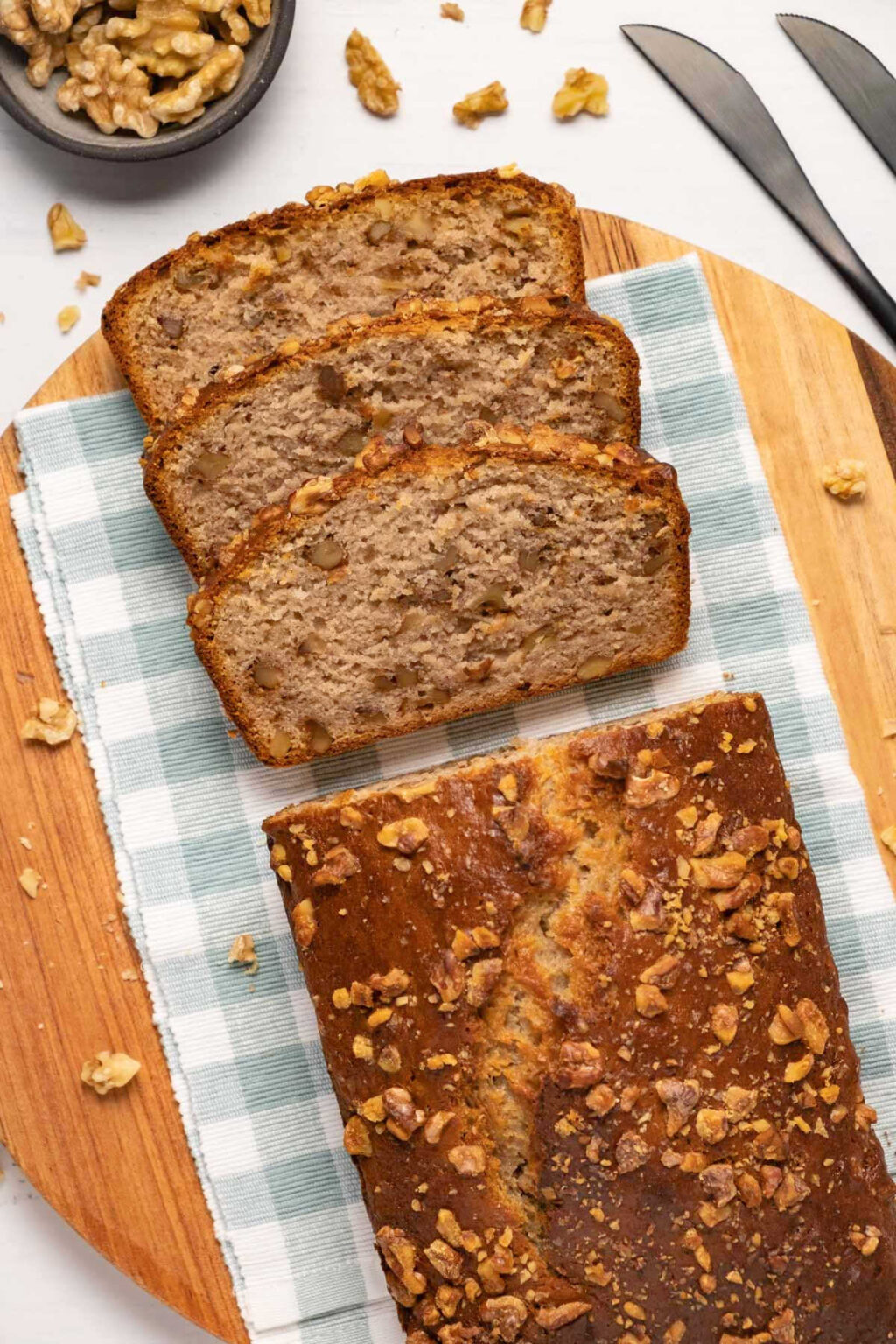
Welcome to this vegan banana bread recipe! If you have ripe bananas sitting on your counter and are looking for a delicious and easy way to use them up, this is the perfect recipe for you. This vegan banana bread is moist, flavorful, and packed with banana goodness. It’s also simple to make, requiring just a few pantry staples and minimal prep work. Whether you’re an experienced baker or a beginner, this recipe is easy to follow and yields delicious results every time. So let’s get started and whip up a batch of this tasty vegan banana bread!

Vegan Banana Bread

Prep Time 10 minutes
Cook Time 1 hour
Total Time 1 hour 10 minutes
Servings 1 Loaf
Calories 318
This ‘tried and true’, classic vegan banana bread recipe is moist, healthy, and so easy to make. It’s egg & dairy free, has an oil-free option, and is the best banana bread ever!

Ingredients

  • 2 cups All-Purpose Flour (250g)
  • 1/2 cup White Granulated Sugar (100g)
  • 1/2 cup Light Brown Sugar (100g)
  • 3 tsp Baking Powder
  • 1/4 tsp Salt
  • 1 tsp Ground Cinnamon
  • 1 and 1/2 cups Mashed Ripe Banana (or 337g peeled weight*)
  • 1/2 cup Soy Milk (120ml or other non-dairy milk)
  • 1/4 cup Coconut Oil (55g or Vegan Butter*)
  • 1 cup Walnuts (100g Chopped, plus more to place on top before baking)*)

Instructions 

  • Preheat the oven to 350°F (180°C). Prepare a 9 x 5 inch loaf pan by spraying it with non-stick spray and lining the bottom with parchment paper. Set aside.
  • Sift all purpose flour into a mixing bowl and add white and brown sugar, baking powder, salt and cinnamon. Mix together.
  • Measure the correct amount of banana and add it to your blender jug along with the soy milk and coconut oil (or vegan butter) and blend until smooth.
  • Pour the blended mix over your dry ingredients in the mixing bowl and mix it into a smooth batter.
  • Add chopped walnuts (optional) and fold in.
  • Transfer the batter to your prepared 9x5 loaf pan and smooth down. Add a few more chopped walnuts on top and place into the oven to bake.
  • Bake for 60 minutes or until a toothpick inserted into the center of the loaf comes out clean.
  • Let it cool in the pan for 10 minutes before removing it from the pan and placing it onto a wire cooling rack to cool completely.

Notes

  1. Spoon and level the flour. The correct way to measure flour is to use the spoon and level method, which is to spoon the flour into your measuring cup and then level off the top with a knife. Don't scoop it and don't pack it into the cup. Alternatively, weigh it on a food scale. 
  2. Measure the banana correctly. If you have a food scale, then you can just weigh the peeled banana to get the correct amount. If you don't have a scale then the best way to measure would be to mash the banana and measure it out in cups. This recipe uses 1 and 1/2 cups mashed banana or 337g. 
  3. Mash or blend. We love blending up the banana, coconut oil and non-dairy milk in this recipe as it results in a very smooth batter and even distribution of that banana flavor. However, if you prefer not to get your blender involved, you can simply melt the coconut oil, mash it in with your banana and add to the mixing bowl along with the non-dairy milk. 
  4. Don't overmix the batter. Once you add the wet ingredients in with the dry you just want to mix it until just mixed. Don't over-mix the batter or the texture and/or rise of your loaf may be impacted. 
  5. Make it oil-free: If you'd like this banana bread to be oil-free then you can replace the coconut oil with applesauce in the same quantity (1/4 cup). 
  6. Make it gluten-free: For a gluten-free version of this recipe, please see our recipe for gluten-free banana bread. 
  7. Storing and Freezing: Store it covered at room temperature where it will stay good for a few (3-4) days. If you want it to last longer, then keep it covered in the fridge where it will last for up to a week. It's freezer friendly for up to 2 months. When you're ready for it, let it thaw overnight in the fridge.

Nutrition

Serving: 1 slice | Calories: 318kcal | Carbohydrates: 48.9g | Protein: 4.8g | Fat: 12.5g | Saturated Fat: 5.2g | Sodium: 222mg | Fiber: 2.4g | Sugar: 24.1g
Author: Ayman
Calories: 318kcal
Course: Breakfast
Cuisine: vegan
Keyword: vegan banana bread, vegan bread, vegan recipes

Welcome to this vegan chocolate cake recipe! If you’re a chocolate lover looking for a delicious and guilt-free dessert, then this is the recipe for you. Not only is this cake vegan, but it’s also quick and easy to make, requiring just one bowl and a handful of simple ingredients. The result is a moist, rich, and full of chocolate flavor cake that will satisfy even the most discerning chocolate connoisseur. So let’s get started and whip up a batch of this delicious vegan chocolate cake!


Easy Vegan Chocolate Cake

Prep Time 15 minutes
Cook Time 20 minutes
Servings 10 slices
Calories 234
Experience the ultimate chocolate indulgence with this easy and quick vegan chocolate cake recipe. Made in just one bowl, this cake is sure to become your new favorite. Moist, rich, and full of chocolate flavor, this vegan chocolate cake is the best you'll ever taste.

Ingredients

  • 1 and 1/2 cups 188g All-Purpose Flour*
  • 1/2 cup 43g Cocoa Powder (Unsweetened)
  • 1 cup 200g White Granulated Sugar
  • 1 tsp Baking Soda
  • 1/2 tsp Salt
  • 1 Flax Egg 1 Tbsp Ground Flaxseeds + 3 Tbsp Hot Water*
  • 1 cup 240ml Soy Milk (or Almond Milk*)
  • 2 tsp Vanilla Extract
  • 1/3 cup 80ml Canola Oil (or Vegetable Oil)
  • 1 Tbsp Distilled White Vinegar or Apple Cider Vinegar

Instructions 

  • Preheat your oven to 350°F (180°C). Spray two 8-inch cake pans (see notes for different cake pan sizes*) with non-stick spray and line the bottoms with circles of parchment paper. Set aside.
  • Sift the flour and cocoa powder into a mixing bowl and add the sugar, baking soda and salt. Mix together.
  • Prepare your flax egg by mixing one tablespoon of flaxseed meal with 3 tablespoons of hot water and leave to sit for a minute or so to become gloopy.
  • Add your flax egg, soy milk (or other non-dairy milk), vanilla extract, oil and vinegar to the mixing bowl and mix in. Don't overmix.
  • Divide the batter evenly between the prepared cake pans.
  • Place into the oven to bake for 20 minutes or until a toothpick inserted into the center of one of the cakes comes out clean.
  • Allow the cakes to cool in the cake pans for a few minutes and then transfer them to a wire cooling rack to cool completely before frosting.
  • Frost with our vegan chocolate frosting or a half batch of our vegan chocolate buttercream frosting.

Notes

*Measure the flour correctly. Measure the flour correctly using the spoon and level method - spoon the flour into your measuring cup and then level off the top with a knife. Don't scoop it and don't pack it into the cup. Alternatively weigh it on a food scale. 
*Flax egg. You can replace the flax egg with 3 Tablespoons of applesauce. 
*Cake Sizes: This cake can be adapted for different cake sizes as follows:
  • Three 6-inch round cake pans - bake for 20 minutes.
  • Two 7-inch round cake pans - bake for 25 minutes. 
  • Two 8-inch round cake pans - bake for 20 minutes. 
  • One 9-inch round cake pan - bake for 30 minutes.
  • 9x9 square cake pan - bake for 25 minutes.
  • 9x13 sheet cake - bake for 15-20 minutes. 
*Gluten-Free: If you want to adapt this cake for gluten-free then we've done all the heavy lifting for you already. Check out our gluten-free chocolate cake that adapts this recipe beautifully to create a perfectly moist and delicious gluten-free version.
*Cupcakes: This recipe adapts beautifully to 12 perfect cupcakes. Bake them for 20 minutes. Or check out our classic vegan chocolate cupcakes. 
*Storing and Freezing: Keep it covered at room temperature where it will stay perfectly fresh for a couple of days, or covered in the fridge where it will stay good for up to a week. It's freezer friendly for up to 3 months. 

Nutrition

Serving: 1 slice (of 10) | Calories: 234kcal | Carbohydrates: 37.9g | Protein: 3.6g | Fat: 8.5g | Saturated Fat: 1g | Sodium: 271mg | Fiber: 2.3g | Sugar: 20.2g
Author: Ayman
Calories: 234kcal
Course: cake, Dessert
Cuisine: vegan
Keyword: chocolate cake, vegan cake, vegan recipes

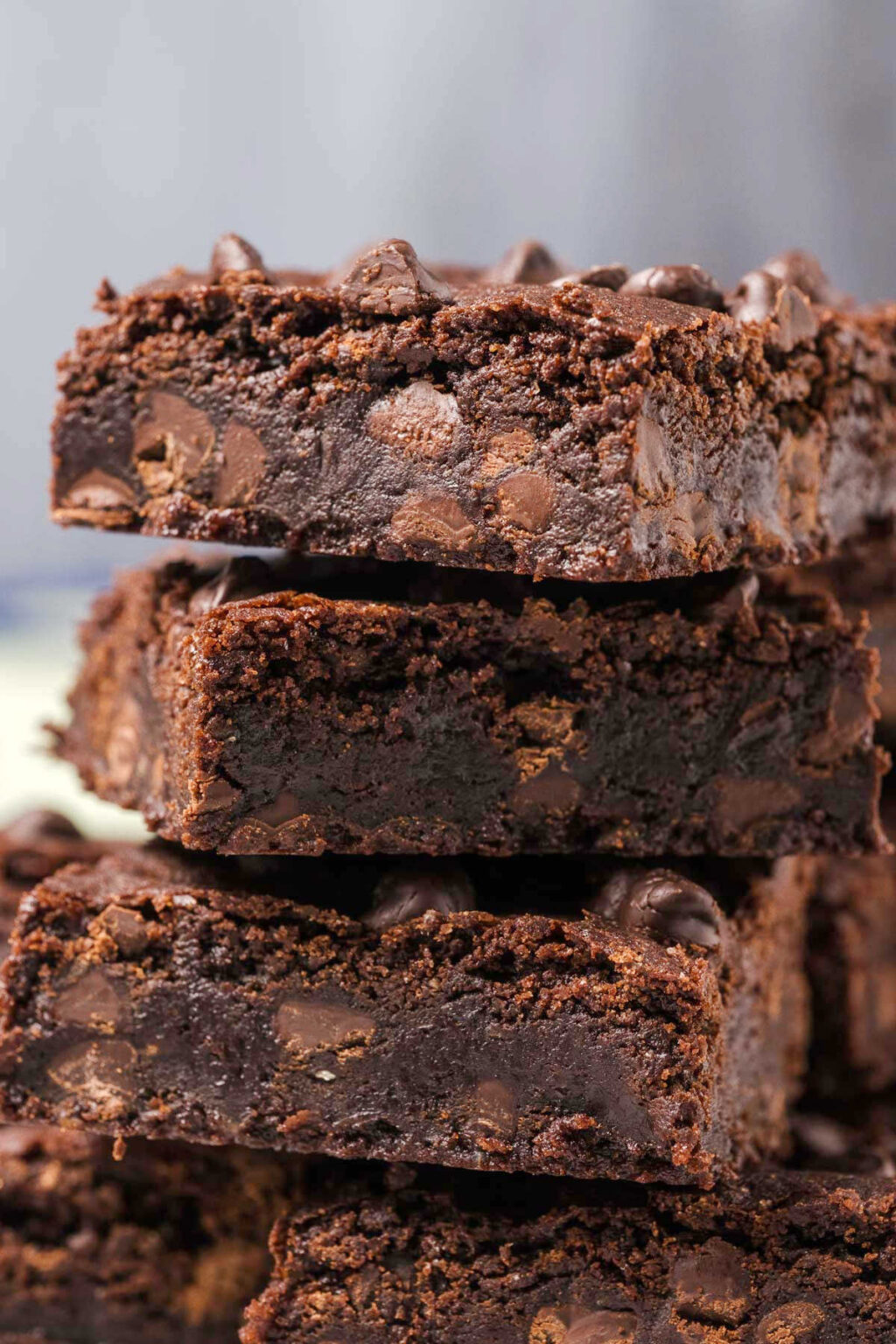
Are you ready for a vegan dessert that’s indulgent, rich, and oh-so-fudgy? Look no further than these vegan brownies! This recipe is perfect for chocolate lovers and requires just a few simple ingredients. With a texture that’s both soft and chewy, these brownies are sure to become a new favorite. Whether you’re a seasoned baker or just starting out, this recipe is easy to follow and yields delicious results every time. So let’s get started and whip up a batch of these irresistible fudgy vegan brownies!

Fudgy Vegan Brownies

Prep Time 15 minutes
Cook Time 40 minutes
Servings 16
Calories 314
These vegan brownies are guaranteed to blow your mind with their rich, fudgy texture. After trying them at home, you'll never go back to store-bought brownie mix! Not only are they delicious, but they're also quick and easy to make, making them is a favourit thing to the whole family.

Ingredients

  • Ingredients
  • 1 and 1/2 cups 188g All Purpose Flour*
  • 1 cup 86g Cocoa Powder (Unsweetened)
  • 1 tsp Baking Powder
  • 1 tsp Salt
  • 3/4 cup 170g Vegan Butter
  • 1/2 cup 90g Vegan Chocolate Chips
  • 3 Tbsp Ground Flaxseed Meal
  • 1/2 cup 120ml Hot Water
  • 2 cups 400g White Granulated Sugar
  • 2 tsp Vanilla Extract
  • 1 cup 175g Vegan Chocolate Chips (plus more to place on top of the brownies before baking)

Instructions 

  • Before you start making your brownies, add the 3 tablespoons of ground flaxseeds to a bowl and then pour over the 1/2 cup (120ml) hot water from the kettle. Leave it to sit while you prepare your other ingredients.
  • Preheat the oven to 350°F (180°C) and spray a 9x9 square baking dish* with non-stick spray and line it with parchment paper so that there is overhang on either side. Set aside.
  • Sift the all purpose flour and cocoa powder into a mixing bowl and add the baking powder and salt. Mix together.
  • Add the vegan butter and 1/2 cup chocolate chips to a microwave safe bowl. Microwave in 30-second intervals, bringing it out to stir every 30-seconds until melted.
  • Now add the flax eggs, white granulated sugar and vanilla extract to the melted vegan butter and chocolate and whisk it in with a hand whisk.
  • Pour this out over your dry ingredients in the mixing bowl and mix into a thick brownie batter.
  • Add the cup of chocolate chips and mix in.
  • Transfer the brownie mix to your prepared 9x9 square baking dish and smooth down.
  • Add a few more chocolate chips directly to the top of the brownies.
  • Place into the oven and bake for 35-40 minutes.
  • The brownies are done when they are dry and shiny on top and a toothpick inserted into the center of the brownies comes out with moist crumbs (or melted chocolate) but not wet batter.
  • Let the brownies cool and firm up for 15 minutes in the pan before using the parchment paper overhang to remove them from the pan and place onto a wooden board. Let them cool completely before slicing.

Notes

*Measure the flour correctly. Use the spoon and level method - spoon the flour into the measuring cup and level off the top with a knife. Don't scoop it and don't pack it into the cup. If you have a food scale then just weigh the flour on the food scale for total accuracy. 
*Don't substitute ingredients. Substituting ingredients doesn't work well in this recipe. Everything works together in this recipe and any substitutions could throw out the balance. 
*Ultra fudgy brownies: Let the brownies firm up in the fridge for ultra fudginess. When the brownies have cooled at room temperature, place them into the fridge for an hour or two before serving. They get ultra fudgy!
*Don't slice them when they're still warm. If you slice the brownies when they're still warm, they can crumble. Make sure they are completely cooled before slicing. 
*Make them in a 9x13 baking pan: You can make these brownies in a 9x13 baking pan, the brownies will just be thinner. Baking time is 25-30 minutes. 
*Gluten-Free: We have not tested these brownies as gluten-free but my best guess would be that a gluten free all purpose blend would work great in place of the regular flour in this recipe. Alternatively, take a look at our vegan gluten free brownies. 
*Storing and Freezing: Leftover brownies can be stored in an airtight container at room temperature or in the fridge for up to a week. They are freezer friendly for up to 3 months. Thaw them overnight in the fridge and let them come up to room temperature on the counter before serving.

Nutrition :

Serving: 1 Serving (of 16) | Calories: 314kcal | Carbohydrates: 48.1g | Protein: 3.2g | Fat: 14.5g | Saturated Fat: 5.6g | Sodium: 261mg | Fiber: 3.7g | Sugar: 34.1g
Author: Ayman
Calories: 314kcal
Course: Dessert
Keyword: brownies, dessert, vegan brownies, vegan recipes